
17th EUMETSAT User Forum in Africa
Meteorologists from across Africa will meet to discuss latest developments, and share knowledge and best practices.
The 2026 EUMETSAT Meteorological Satellite Conference will take place in Darmstadt, Germany
21 – 25 September 2026 (Monday to Friday)
We strongly advise you book your accommodation as early as possible to ensure accommodation close to the congress centre.
We selected a few hotels in walking distance to the hotel. To make a booking, follow this link.
Following a comprehensive review of all abstracts, we have consolidated the following themes and subthemes within the programme.
The EUMETSAT new-generation fleeFt is now becoming a key asset for operational Earth observations. This session aims to assess satellite products and their initial use in different application areas. By 2026, we expect a consolidated analysis of Meteosat 12 and of the Arctic Weather Satellite, as well as an initial assessment of the first EUMETSAT polar system and the EUMETSAT geostationary hyperspectral sounder. The Copernicus Sentinel missions focusing on atmospheric composition capabilities and altimetry applications will be further explored. Finally, we intend to explore synergies across missions, with a dedicated focus on the EUMETSAT-NOAA joint polar satellite system.
The session will be organised around 6 thematic blocks:
This session focuses on the critical journey from raw Earth observation data to actionable climate intelligence. The session will explore the contribution of different missions, from EUMETSAT, Copernicus and international partners, to monitor the carbon, energy and water cycles. This will allow the community to review key operational contributions to greenhouse gas monitoring, such as CO2M and other missions, top of the atmosphere energy budget or water resources. It will cover also the generation of Fundamental and Climate Data Records, their application in different value chains, and the co-creation process with end-users to ensure products directly inform climate services and policy.
This session examines how satellite observations enable seamless prediction systems across all timescales. A core focus is quantifying the impact of this data on forecast skill and translating these advancements into actionable, sector-specific predictions for managing wildfires, energy grids, aviation, and other critical applications.
This session delves into the evolving landscape of technology trends in the space sector, with a forward-looking approach to the next 25 years. Key discussions will include a foresight session by invitation. Furthermore, participants will explore instrumental trends and the readiness of different solutions. Additionally, the session will address cloud and digital trends that can be critical to building future ground segments.
This session will comprise three key blocks:
This session focuses on the critical zones where Earth's major systems interact: the ocean-atmosphere, land-atmosphere and ice-atmosphere interfaces. We will explore the latest satellite observations and derived products that monitor these dynamic surfaces (land, ocean, cryosphere) and the Planetary Boundary Layer (PBL)—the turbulent atmospheric layer directly influenced by them. Presentations will cover how this data is revolutionising our understanding of energy, moisture, and momentum exchanges, which are fundamental to weather, climate, and environmental forecasting.
This session provides insight into the coordination of European and international operational satellite initiatives, set within the broader framework of key global coordination mechanisms such as the Committee on Earth Observation Satellites (CEOS), the Coordination Group for Meteorological Satellites (CGMS) and other international networks. We will invite operational agencies and leading research institutions to present their current and future horizons for environmental satellite programmes. A core focus will be on discussing how these entities interact and align their efforts—both with each other and within these vital international forums—to address global environmental and climate monitoring challenges. The first day's introductory session will provide a comprehensive overview of national, European, and international Earth observation programmes, establishing the foundational landscape for these discussions.
This year's conference has a programme packed with interesting sessions, workshops and other events. Some of these have a "first come first served" policy so please read the description of each before registering.
This hands-on training will explore how Sentinel-3 FRP and MTG FCI data can be used to analyse fire events in terms of intensity and fire dynamics. Participants will be introduced to Copernicus and EUMETSAT products and will learn the practical workflows for accessing, visualising, and interpreting satellite data in the context of active fire events.
The workshop will take place on Tuesday 22 September from 12:30 to 14:00.
This tutorial is designed for a broad audience of Earth observation data users who want to explore and analyse EO data through data cubes without needing deep technical expertise.
Participants will be guided through accessing pre-configured data cubes containing selected EUMETSAT datasets. Using an interactive environment, they will learn how to:
The tutorial provides an accessible introduction to modern EO data access methods, lowering the barrier between complex EO datasets and practical analysis. Participants leave with hands-on experience on how to work with selected EUMETSAT and SAF datasets, and a better understanding of the richness of information these datasets contain.
The workshop will take place on Wednesday 23 September from 12:30 to 14:00.
This training session provides a practical introduction to DestinE and the Data Lake Edge services as well as the HDA (Harmonised Data Access) service. It covers the end-to-end journey from navigating the platform to accessing and using Edge computing services. The session will cover how HDA provides unified data discovery, access, and retrieval mechanisms to support a wide variety of applications.
Participants will gain insights into the available services that enable the development of new DestinE applications and services at the edge of data. By the end of the training, attendees will:
This training is suitable for all DestinE users, including non experts.
The workshop will take place on Thursday 24 September from 12:30 to 14:00.
With the focus on exploring ideas regarding potential career opportunities, the ECS lunchtime career dialogues is a session where invited senior professionals share experiences and advice from their careers. After a brief introduction of the experts, the participants break out into small groups with one expert each, where the questions and topics of interest of the participants can be discussed in an informal setting. To gather experiences from different career paths, the groups will rotate to enable discussions with different experts.
Participants will be approached to share their key questions and career directions of interest (academia, industry, etc.) prior to the event, to help the organisers and senior professionals tailor the event to the needs and interests of the early career participants.
The event will take place on Wednesday 23 September from 12:30 to 14:00.
As EUMETSAT celebrates its 40th anniversary, we're forecasting a high probability of fun! Drop by our lunch break pub quiz for a quick mental workout—expect trivia on satellites, weather, history, and a few surprises along the way. Come solo or form a team, and see if you can rise above the competition—no satellite dish required.
This will be a "free for all" fun quiz held in the plenary room on Wednesday 23 September from 12:30 to 13:30. No lunch will be provided but fun will be guaranteed.
Join us as we celebrate 40 years of innovation at EUMETSAT by reviewing our legacy, examining how our environment has changed, and looking forward to what the next 40 years might hold. Expect an evening filled with insights, interaction, as well as a bit of the unexpected.
The Innovation Café will take place at the TU Darmstadt starting at 19:00.
If you are interested, please register here.
The city of Darmstadt, host to EUMETSAT's Headquarters and city of science, will be providing tours to interested conference participants on Tuesday and Thursday as of 18:00. Participation is limited so if you are interested, please mark your interest on the conference registration form.
The tours will be as follows:
Both tours will leave from the congress centre on Tuesday and Thursday at 18:00.
Please note that the fee is independent of the number of days you attend the conference.
Students are asked to send a scan of their student ID card or a letter from their University on headed paper confirming their student status to @email when submitting the registration.
To register online, please go to the registration form.
You will receive an automatic email confirmation upon receipt of the completed registration form. The email will contain all registration details.
Early registration will take place on Sunday 20 September starting at 16:00 in the Atrium of the Darmstadtium (congress venue). It is followed by a Welcome Drink from 18:00 to 19:30. Registration will continue on Monday at 08:00 and throughout the following days.
Payments can be made via a secured online platform in Euros using standard bank cards, such as VISA or MasterCard. Late registration payments made on site may be made in cash (Euros) or bank card. To make a payment please use the link provided in the registration confirmation email.
Payments can also be made by bank transfer. Please instruct your bank to carry out the transaction “free of all bank charges for the recipient”. Any bank fees will be charged to the participant. Please indicate your name and Ref. No (reference number) on every bank transfer. You will find your Ref. No. on the automatic confirmation email you will receive after the registration process.
All cancellations and changes are to be addressed to the congress secretariat in writing (letter or email) at any stage prior to or during the event: @email.
All refunds will be processed after the conference.
Participants unable to attend may transfer their booking to another person.
During the conference, the Scientific Programme Committee will select five papers from those who applied to the Early Career Scientist Initative (ECSI), that will receive an award consisting of travel funding and free conference participation for the EUMETSAT conference in 2027. The selected papers will be especially promoted during the closing plenary.

Please note that winners of previous awards are not eligible to apply for the award again, although they remain welcome to present their papers at the conference. Previous winners attending a future conference may also be invited to participate in the Scientific Programme Committee.
In addition to this, a special event titled “lunchtime career dialogues” will take place during the Wednesday lunchbreak.
With the focus on exploring ideas regarding potential career opportunities, the ECS lunchtime career dialogues is a session where invited senior professionals share experiences and advice from their careers.
Senior professionals who would like to volunteer to share their career advice, can email the organisers:
Kuoni Global Travel Services (Schweiz) AG
Elias Canetti Strasse 2
8050 Zurich
Switzerland
Phone : +41 58 458 65 66
E-mail: @email
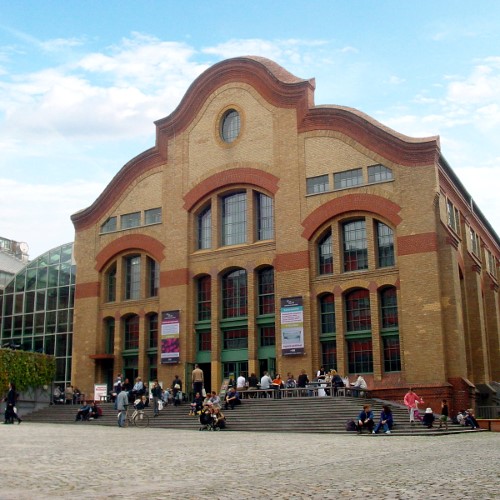
Darmstadtium
Schlossgraben 1, 64283 Darmstadt

Registration is mandatory for all networking events at the conference. For catering purposes, please indicate on the registration form which networking event you will attend and whether you will be accompanied (limited to one accompanying person). Please note that for some events we have a limited number of participants and tickets will be allocated on a first come, first served basis.
Welcome drink and early registration – included in registration fee
Early registration will take place on Sunday 20 September starting at 16:00 in the Atrium of the Congress Centre. It is followed by a Welcome Drink from 18:00 to 19:30. Registration will continue Monday at 08:00 and throughout the following days.
40th anniversary celebratory drink – included in registration fee
To kick-start a week of networking and celebration for EUMETSAT’s 40th anniversary, we are inviting you to a celebratory drink in the atrium of the Congress centre on the first day of the conference, Monday 21, from 18:00 to 19:00.
40th anniversary cocktail dinner – additional fee of 35 EUR per person (conference participant and accompanying person)
The 40th anniversary cocktail dinner will take place on Wednesday 23 September from 18:30 to 23:00 at the Central Station, one of Darmstadt most renowned landmarks for social events, featuring local German delicacies.
The dinner will open with an inspiring event, featuring two leading voices of polar exploration, Jean-Louis Etienne and Heidi Sevestre, sharing first-hand insights from the Arctic—where climate change is unfolding fastest. A powerful conversation on what is changing, and why it matters to us all.
The Central Station is around 10 minutes walking distance from the congress centre. Maps will be provided through the conference app and displayed in the sessions.
With the contribution of: AIRBUS
For further information about the conference and the city of Darmstadt, please download the information package here.





The European Organisation for the Exploitation of Meteorological Satellites is an intergovernmental organisation based in Darmstadt, Germany, currently with 30 Member States: Austria, Belgium, Bulgaria, Croatia, Czech Republic, Denmark, Estonia, Finland, France, Germany, Greece, Hungary, Iceland, Ireland, Italy, Latvia, Lithuania, Luxembourg, the Netherlands, Norway, Poland, Portugal, Romania, Slovakia, Slovenia, Spain, Sweden, Switzerland, Turkey and the United Kingdom.
EUMETSAT operates the geostationary satellites Meteosat-10 and -11 over Europe and Africa, and Meteosat-9 over the Indian Ocean. EUMETSAT also operates two Metop polar-orbiting satellites as part of the Initial Joint Polar System (IJPS) shared with the US National Oceanic and Atmospheric Administration (NOAA).
In addition, EUMETSAT is a partner in the cooperative high precision ocean altimetry Jason missions involving Europe and the United States (Jason-3 and Sentinel-6 Michael Freilich).
The data and products from EUMETSAT’s satellites are vital to weather forecasting and make a significant contribution to the monitoring of environment and climate change. The European Union has entrusted EUMETSAT with exploiting the four Sentinel missions (Sentinel-3, -4, -5 and -6) of the Copernicus space component dedicated to the monitoring of atmosphere, ocean and climate on its behalf. EUMETSAT will carry out these tasks in cooperation with ESA. EUMETSAT has established cooperation with operators of Earth observation satellites from Europe and China, India, Japan, Russia, South Korea and the United States.
In addition, Météo-France is also involved in the implementation of operational services in the context of the EU Copernicus programme.